The wax
The model is built in beeswax and resin, over a core if the piece is to be hollow. Everything the bronze will be, the wax already is.
Vaarpu — Swamimalai
Vaarpu casts icons, lamps and bells by cire perdue — wax model, investment shell, and one pour that either works or does not. Between the crucible and the finished piece there is a quarter of an hour in which the metal decides, on its own, whether the casting is sound. This page lets you watch that quarter of an hour, and interfere with it.
That is what cire perdue means, and it is the whole reason the trade is difficult. There is no test pour. The mould can only be used once, because getting the casting out means breaking it.
The model is built in beeswax and resin, over a core if the piece is to be hollow. Everything the bronze will be, the wax already is.
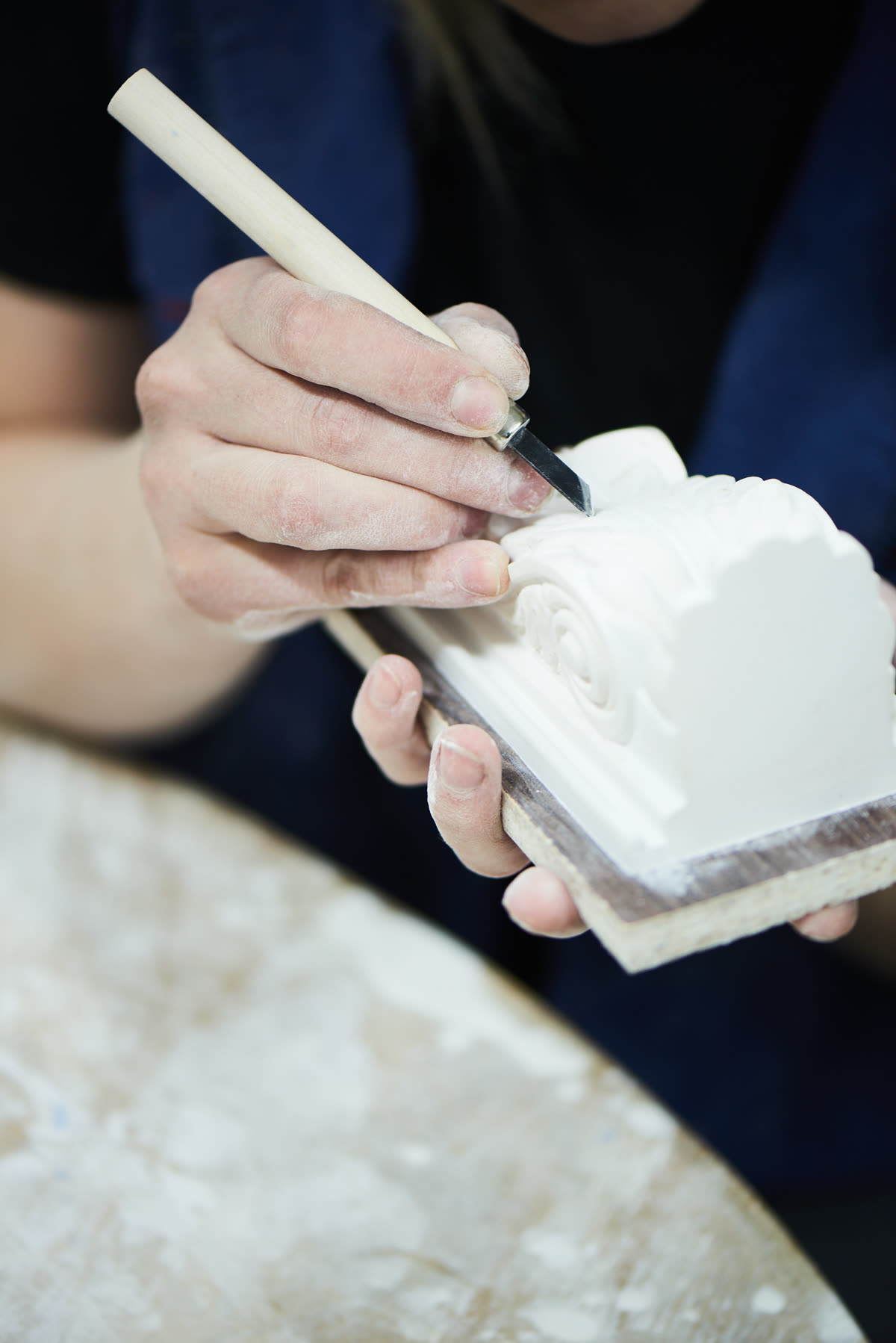
Layer on layer of plaster and silica, built up and dried until the shell can hold a quarter tonne of metal without moving.
Fired to burn the wax out, then filled in one continuous pour. Stop halfway and the two fronts will not knit — that is a cold shut, and it is scrap.
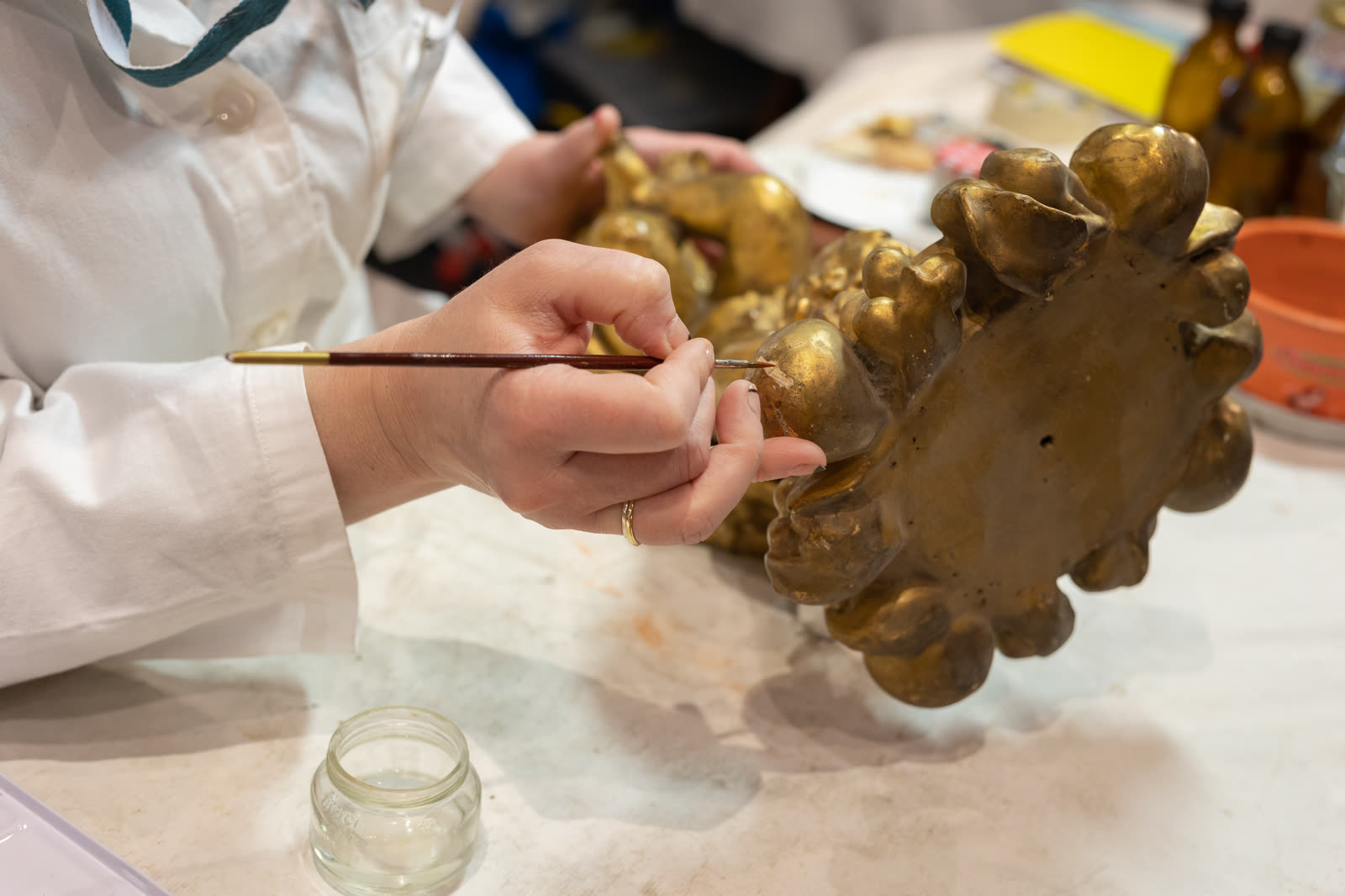
The shell comes off, the feeders are sawn away and remelted, and the surface is worked back by hand until the tool marks are the only ones left.
Bronze shrinks about four and a half percent as it freezes, and that volume has to come from somewhere still molten. Watch the front close in from the mould walls. When it seals a pocket of liquid off from the pour channel, that pocket is already lost — it will eat a hole in the casting to pay for its own shrinkage. Put a riser where it can reach.
The casting
The foot is four times the thickness of the stem it hangs from.
Click in the flask to place the riser, or use the arrow keys. It is sawn off afterwards, so a void inside it costs nothing. These are turned pieces, so a riser set off the centreline goes right round the casting and the section cuts it twice.
Read-out
| Modulus, the foot | — |
|---|---|
| Modulus, riser | — |
| Ratio · rule ≥ 1.2 | — |
| Soundness | — |
Nicolas Chvorinov noticed in 1940 that a casting's freezing time goes as the square of its modulus — volume over cooling surface, t = B·M². It is an observation. Nothing in it explains itself.
The solver next door has never heard of it. It knows conduction and latent heat. So: cast six plates of different thickness, time each one to solid, and fit the exponent.
Not exactly two — and it should not be. The exponent 2 assumes a casting with no internal temperature gradient, losing heat into a mould that never warms through. Bronze conducts well but not infinitely, and a plate loses heat from its ends as well as its faces. Chvorinov's own castings fitted between 1.5 and 2 for the same reasons, which is why every handbook since has told founders to calibrate the pair on their own work rather than trust the textbook pair.
The figure above is fitted on 2.7 mm cells, which is as fine as five castings can be run while you wait — it lands near 1.76. Off the clock the number settles: 1.854 at 3.3 mm, 1.811 at 2.1 mm, 1.809 at 1.5 mm. It has converged by then, and it has converged on 1.81 rather than on 2. The rule is real, and so is its error term.
Every warm pixel in the flask is Planck's law, evaluated at that cell's temperature, integrated against the 1931 colour-matching functions and converted to sRGB. Drag along the bar. Under about 525 °C — the Draper point — a solid emits nothing an eye can see, which is why the last third of every casting's cooling happens in the dark.
Four generations have judged this heat by eye. The instrument only tells them what they already knew.
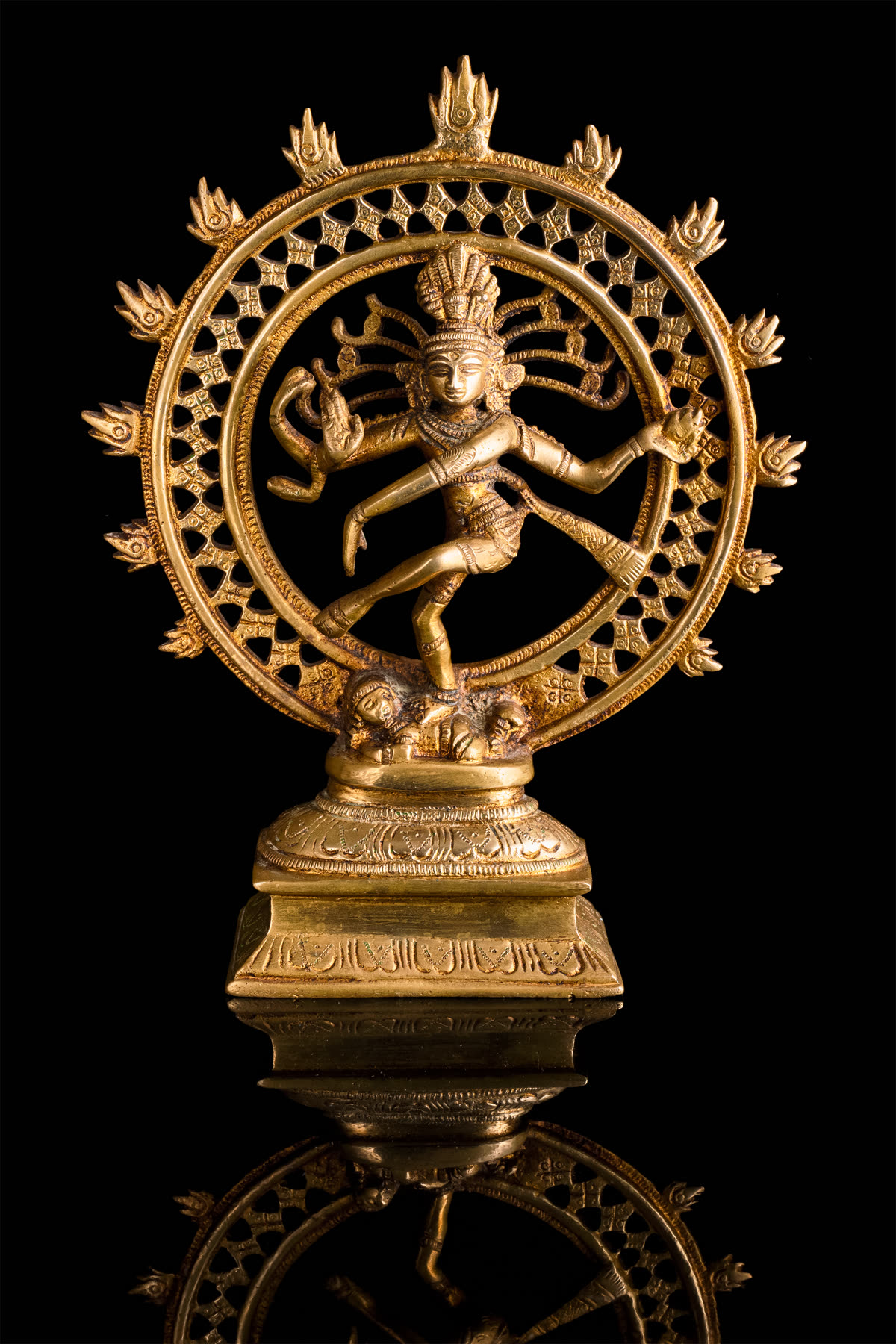
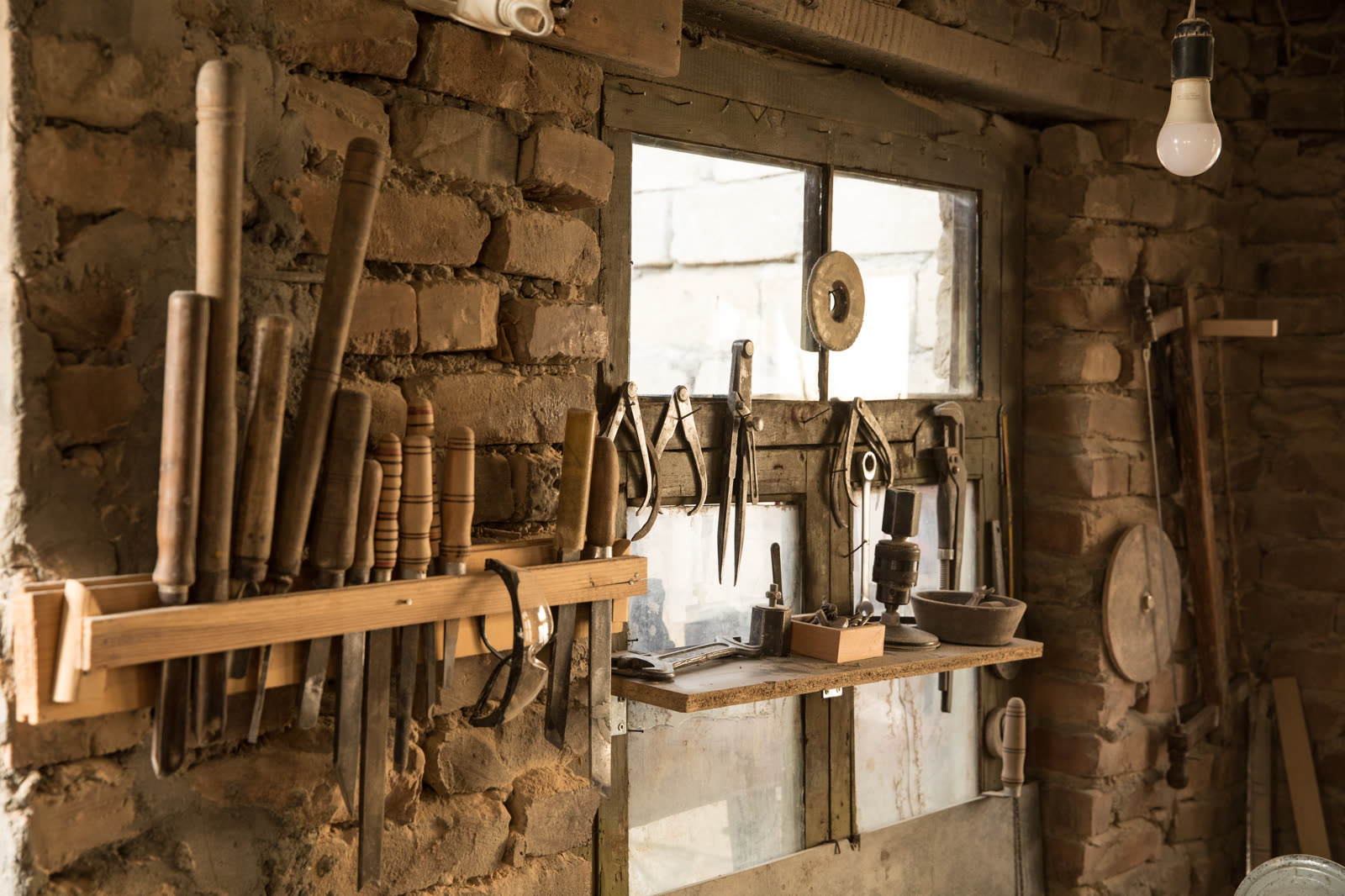
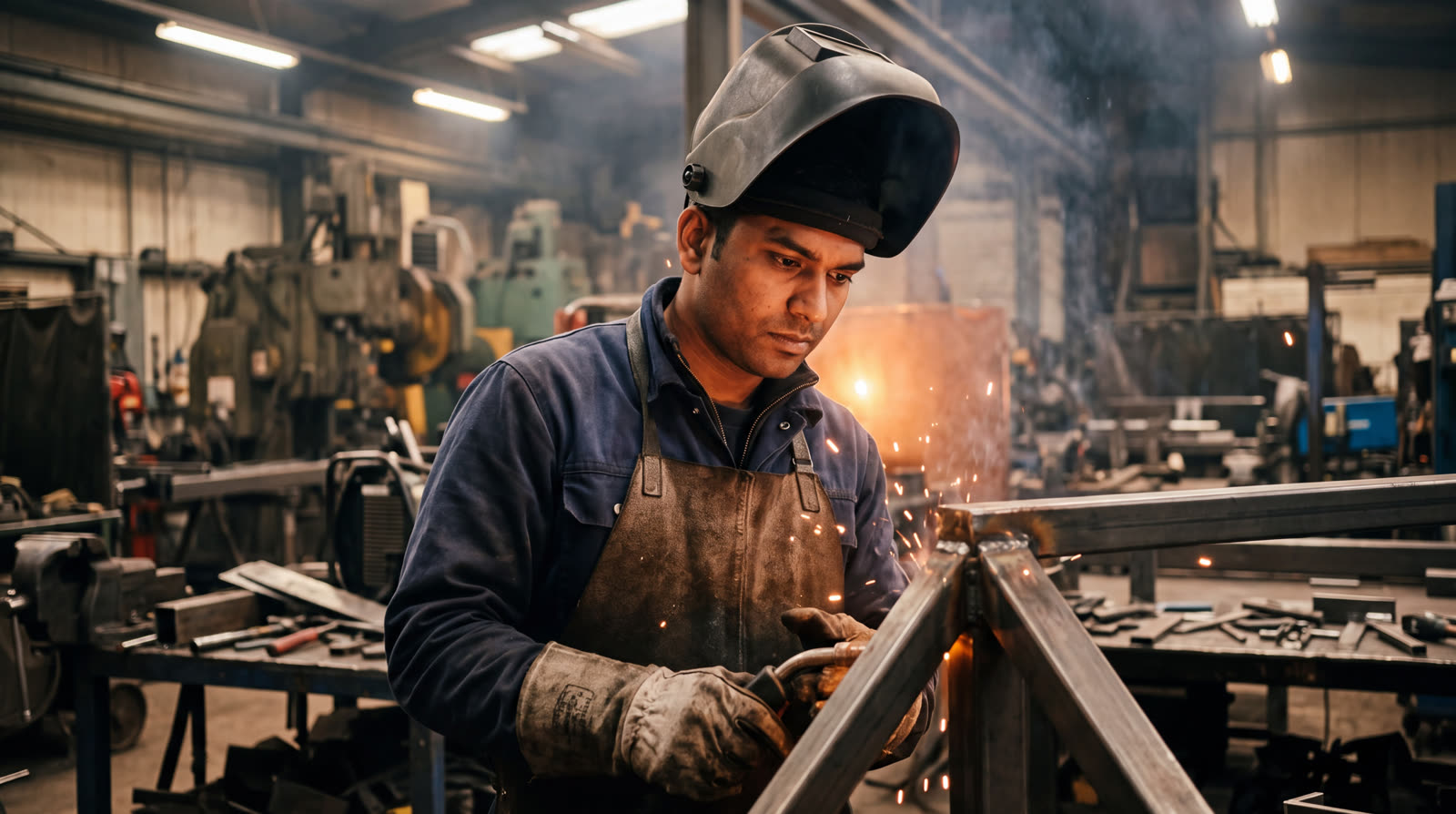
The town has cast bronze by this method for something over a thousand years, in an unbroken line from the Chola foundries that supplied the temples along the Kaveri. The proportions are still set out in the shilpa canon; the alloy is still copper with tin and a little lead; the shell is still built up by hand over a week.
What has changed is that we can now say in advance where a casting will draw, instead of finding out when the shell comes off. That is the only part of this trade the last hundred years improved, and it is the part this page is about.
That is genuinely most of it. The piece, the height, and whether it is going indoors or into weather — enough to say what it should be cast in, how it needs to be fed, and what the patina wants to be. Drawings are welcome and not required; a photograph of something you like is often better.
Commissions run eight to sixteen weeks depending on height and finish. We will tell you which of those it is before you commit to anything.
A model is made in wax, coated in a plaster-and-silica investment shell, and fired. The wax runs out and burns away, leaving a cavity in the exact shape of the model. Molten bronze at about 1150 °C is poured into that cavity, the shell is broken off, and the casting is chased and patinated. The wax is destroyed every time, which is why each casting is unique.
Bronze loses about four and a half percent of its volume as it freezes, and that volume has to be drawn from metal that is still liquid. If a pocket of liquid is cut off from any feed path before it solidifies, nothing can replace what it loses, and it leaves a void inside the casting. The fix is a riser: a reservoir of metal, attached to the heavy section, sized so that it freezes later than the section it feeds.
Foundry practice sizes a riser by modulus — the ratio of volume to cooling surface area. The riser's modulus should be at least 1.2 times that of the section it feeds, so it is still liquid when that section needs metal. You can test it in the flask above: below that ratio the model leaves a void, and at it the casting comes out sound.
Chvorinov observed in 1940 that solidification time is proportional to the square of the modulus. It is empirical, with no derivation attached. The simulation on this page recovers it from the heat equation alone, fitting an exponent of about 1.8 rather than exactly 2 — the difference is what the rule's own assumptions predict, since real castings have internal temperature gradients and lose heat from their edges.
Write to studio@webstoree.com or call +91 89815 64862. Say what the piece is, roughly how tall it stands, and whether it is going indoors or into weather.